

Author
Eric A. Hanushek
Articles
Is the U.S. Catching Up?
International and state trends in student achievement
Grinding the Antitesting Ax
More bias than evidence behind NRC panel’s conclusions
Are U.S. Students Ready to Compete?
The latest on each state’s international standing
Valuing Teachers
How much is a good teacher worth?
Teaching Math to the Talented
Which countries—and states—are producing high-achieving students?
An Effective Teacher in Every Classroom
A lofty goal, but how to do it?
Total Student Load
Review of William Ouchi’s The Secret of TSL
Many Schools Are Still Inadequate, Now What?
Is court involvement in school spending essential to reform, or can we use education funding to drive reforms that promise better outcomes for students?
Education and Economic Growth
It’s not just going to school, but learning something while there that matters
The Confidence Men
Selling adequacy, making millions
RAND versus RAND
What Do Test Scores in Texas Tell Us? by Stephen P. Klein et al.
Deconstructing RAND
Improving Student Achievement: What NAEP State Test Scores Tell Us by David W. Grissmer et al.
The Seeds of Growth
The United States became the world’s economic superpower over the course of the 20th century. But can today’s education system be counted on to fertilize growth in the future?
Lost Opportunity
Increased economic growth, fueled by improvements in student performance, might have funded the nation’s entire K–12 education budget by now
High-Stakes Research
Accountability works after all
The Revolving Door
A path-breaking study of teachers in Texas reveals that working conditions matter more than salary
Pseudo-Science and a Sound Basic Education
Checked: “The New York Adequacy Study: Determining the Cost of Providing All Children in New York an Adequate Education,” American Institutes for Research and Management Analysis and Planning (March 2004). “Resource Adequacy Study for the New York State Commission on Education Reform,” Standard & Poor’s School Evaluation Service (March 2004). “Report and Recommendations of the [...]
Blog Posts/Multimedia
What Happened to 2007?
We need to return to the task of 2007 and to judge what might or might not usefully change in NCLB.
Why Educators’ Wages Must Be Revamped Now
Some districts are spending more than they need to spend, based on what other districts show is possible.
We Know the Answer, But What Is the Question?
We cannot paper over the fact that a large number of other countries have shown that it is possible to develop considerably higher skills in their youth than we are doing
Evaluating Teachers AND Administrators
The sheer magnitude of impact that effective and ineffective principals have underscores the need for a reliable and accurate system for evaluating principals.
The Role of Principals in Successful Schools
Eric Hanushek discusses his new study, School Leaders Matter, with Paul Peterson.
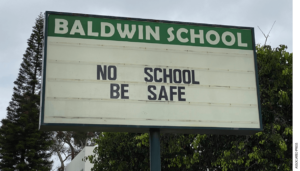
The California Student Lockout
“If you will not give the money we want for schools, we will close them down,” the state threatens.
International Benchmarking of Student Achievement
Most educational standard setting, performance assessment, and judgments about appropriate levels of achievement today are based on history and custom with a little bit of “professional dreaming.” The process generally lacks any context of what our international competitors are doing.
Is the Common Core Just a Distraction?
All of the intense pushing and shoving about the Common Core leaves one simple question: should we care?
Misplaced Optimism and Weighted Funding
Liberals and conservatives alike have made “weighted student funding” a core idea of their reform prescriptions. Both groups see such weighted funding as providing more dollars to the specific schools they tend to focus upon, and both see it as inspiring improved achievement through newfound political pressures. Unfortunately, both groups are very likely wrong.
Paying Attention to Classroom Reality
Continuing anachronistic regulatory and policy efforts aimed at input measures and credentials does not make sense when the alternative — a capacity to look at the varying levels of education that are actually being provided to our students — is available to us.
The Teacher Effectiveness Gap
It is difficult to ascertain how much variation in teacher quality there is between schools, but I don’t think answering that question is key to policy.
The Value of Releasing Value-Added Ratings of Teachers
The issue raised by the release of value-added information is simply how quickly and how assuredly we get to a more rational system of evaluations – for both teachers and administrators – and to a more rational personnel system that guarantees an effective teacher in every classroom.
Why Not Have Open Tests?
A more complete integration of testing, accountability, and teaching would be superior to dealing with the integrity of testing in isolation. Let’s put the tests out in the sun instead of trying to lock them up in more and more secure rooms.
The New Worst Way to Deal with Budget Problems
Of all of the options, reducing the length of the school year must be the absolute worst – at least from the perspective of students. But California, always proud of being a leader, has written into law that this is the preferred option if districts face budgetary shortfalls.
The NRC Judges Test-Based Accountability
“Incentives and Test-based Accountability in Education” is unlikely to clear up any issues. Indeed it is more likely to leave the casual reader with just the wrong impression. The remarkable conclusion to be drawn from the evidence presented in the report is how much can be gained from a flawed accountability system.
The Upside of Class Size Reduction
When reducing class size, one must hire more teachers, which means that the school system will essentially get a random draw that is expected to yield an average teacher. But increasing class size means that some current teachers must be laid off, and here the schools have a tremendous advantage.
The New Unionism, Legislative Version
The unions can try to rebuild their image (while doing good for America) by actively participating in efforts to figure out how to evaluate teachers and how schools can make personnel decisions based on those evaluations.
The (Enormous) Economic Returns to a Good Teacher
If we could replace the bottom 5-8 percent of our teachers with average teachers, we could move our students’ achievement up to that of Canada
How Valuable Is an Effective Teacher?
Podcast: Rick Hanushek talks with Ed Next’s Paul Peterson about his new study estimating the economic impact of teachers who produce higher than average gains in student learning.
Looking for a Friend in Court
The courts are so used to measuring education in terms of spending that they tend to be swayed by horror stories without ever conceiving of reforming the way schools spend their money.
Feeling Too Good About Our Schools
Each time international tests of student achievement are released, there is a parade of glib commentators explaining why we should not pay much attention to the generally poor performance of U.S. students.
Improving the Evaluation of Teachers
In an unexpected action last summer, the Los Angeles Times published the ratings of teacher effectiveness for 6,000 teachers by name. The publication created a firestorm. Since my research started this development, I believe it is useful to share my perspectives on how we should judge this development and whether we should stop its spread.
Compared to Other Countries, Does the United States Really Do That Badly in Math?
Many Americans were shocked to learn how poorly U. S. students were doing when the Program on International Student Assessment released its study of math achievement for 2006. But educators were encouraged in December 2008 when another respected international survey, Trends in Mathematics and Science Study, released results from its math testing for 2007. Have we unfairly maligned our schools?
Why Is Reform So Hard?
Many people find it hard to believe that student performance has been flat for four decades when we have more than tripled funding for schools and when we have put into place a number of reform measures. The recent discussions in Congress, however, shed some light on this.
Research and Policy: Master’s Degrees
There are a variety of educational policies that simply conflict with research. One of the largest is pay for master’s degrees.
Florida Positions Itself at the Forefront
Over the past decade, Florida has shown its laser-focus on student performance. Beginning with Jeb Bush and his able and imaginative education team, Florida moved forward on a reform agenda. Now it is showing additional leadership by moving aggressively on issues of teacher quality.
A Clearer Picture on Charter Schools
The effectiveness of charter schools in raising student achievement has become an intensely debated issue. When we last considered this topic, the Department of Education was pushing charter schools but dueling studies introduced uncertainty. A new study by CREDO clears up the uncertainty.
What To Do About NCLB
Three separate lines of inquiry provide evidence that existing accountability systems have led to larger gains than expected in a world without them. At the same time, accountability is a relatively new invention, and it needs to be refined and improved.
Court Mandates on School Funding Sharply Decline
Since 2005, there have been important adequacy case decisions in over a dozen states, and in none of them have the courts required further funding increases. Several courts, when deciding new adequacy cases, have either dismissed them based on separation of powers grounds or have ruled against the plaintiffs on the merits following a trial.
Why are Some Environments Better than Others for Charter Schools? Today’s Policy Question
This has been a good year for evidence on the effectiveness of charters, highlighted by a major national study from CREDO and a new study in the continuing work from New York City. Nonetheless, understanding and interpreting the scientific research within the political and media environment is made more difficult by the political context.
The Supreme Court Gets School Funding Right
One sleeper in the flurry of decisions at the end of the last U.S. Supreme Court term has to be the decision in Horne v. Flores, a long-running Arizona case about funding special programs for English Language Learners (ELL). In overturning lower court decisions calling for continued court-ordered school spending without regard to student outcomes, the Court may lead to a new era of more rational and effective court involvement in school funding policies.
Will Horne v. Flores Affect School Finance Litigation?
Video: Eric Hanushek talks with Education Next about the recent Supreme Court decision on school spending in Arizona, and considers the ruling’s impact on state school finance litigation.
Schoolhouses, Courthouses, and Statehouses
Video: Hoover Institution senior fellows and members of Hoovers Task Force on K12 Education Terry Moe and Eric Hanushek discuss Hanushek’s new book Schoolhouses, Courthouses, and Statehouses.
Sponsored Results
Sponsors
Sign Up To Receive Notification
when the latest issue of Education Next is posted
In the meantime check the site regularly for new articles, blog postings, and reader comments