
Author

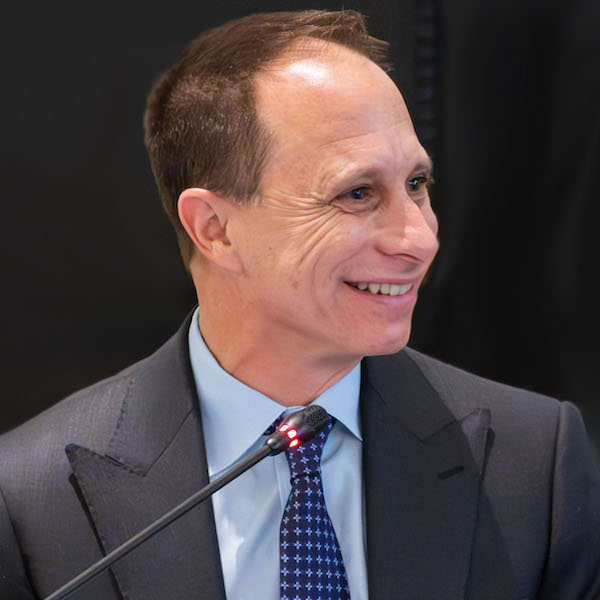
Michael Petrilli

    Author Website: http://www.edexcellence.net/flypaper/


    Author Bio:
    Mike Petrilli is one of the nation’s foremost education analysts. As executive vice president of the Thomas B. Fordham Institute, he oversees the organization’s research projects and publications and contributes to the Flypaper blog and weekly Education Gadfly newsletter. He is also a research fellow at Stanford University's Hoover Institution and Executive Editor of Education Next, where he writes a regular column on technology and media, as well as feature-length articles. Petrilli has published opinion pieces in the New York Times and Wall Street Journal and appears regularly on NBC Nightly News, ABC World News Tonight, CNN, and Fox. He’s been a guest on several National Public Radio programs, including All Things Considered, Talk of the Nation, and the Diane Rehm Show. He is author, with Frederick M. Hess, of No Child Left Behind: A Primer. Previously Petrilli was an official in the U.S. Department of Education’s Office of Innovation and Improvement and a vice president at K12.com. He started his career as a teacher at the Joy Outdoor Education Center in Clarksville, Ohio, and holds a Bachelor's degree in Honors Political Science from the University of Michigan. He lives with his wife Meghan and sons Nico and Leandro in Takoma Park, Maryland.


Articles

The Newsroom’s View of Education Reform

Surprise! The press paints a distorted picture

SUMMER 2012 / VOL. 12, NO. 3


Obama’s Education Record

Does the reality match the rhetoric?

SPRING 2012 / VOL. 12, NO. 2


All A-Twitter about Education

Improving our schools in 140 characters or less

Fall 2011 / Vol. 11, No. 4


Pyrrhic Victories?

The following essay is part of a forum, written in honor of Education Next’s 10th anniversary, in which the editors assessed the school reform movement’s victories and challenges to see just how successful reform efforts have been. For the other side of the debate, please see A Battle Begun, Not Won by Paul E. Peterson, [...]

Spring 2011 / Vol. 11, No. 2


Lights, Camera, Action!

Using video recordings to evaluate teachers

Spring 2011 / Vol. 11, No. 2


All Together Now?

Educating high and low achievers in the same classroom

Winter 2011 / Vol. 11, No. 1


School Reform Hits the Big Screen

Why 2010 is a banner year for the education documentary

Fall 2010 / Vol. 10, No. 4


Bye-Bye Blackboards

Interactive and expensive, whiteboards come to the classroom

Summer 2010 / Vol. 10, No. 3


Charters as Role Models

The charter school movement turns 14

this year, and its behavior, some might say, is “developmentally

appropriate.”

Summer 2005 / Vol. 5, No. 3


Disappearing Ink

What happens when the education reporter goes away?

Fall 2009 / Vol. 9, No. 4


Linky Love, Snark Attacks, and Fierce Debates about Teacher Quality?

A peek inside the education blogosphere

Winter 2009 / Vol. 9, No. 1


Arrested Development

Online training is the norm in other professions. Why not in K–12 education?

Fall 2008 / Vol. 8, No. 4


Opinion Leaders or Laggards?

Newspaper editorialists support charter schools, split on NCLB

Summer 2008 / Vol. 8, No. 3


Wikipedia or Wickedpedia?

Assessing the online encyclopedia’s impact on K–12 education

Spring 2008 / Vol. 8, No. 2


Let’s Talk About It

Talk radio’s take on K–12 education

Winter 2008 / Vol. 8, No. 1


Teacher’s Little Helper

New technologies target teacher performance

Summer 2007 / Vol. 7, No. 3


Testing the Limits of NCLB

Implementation is not the problem

Fall 2007 / Vol. 7, No. 4


The Key to Research Influence

Quality data and sound analysis matter, after all

Spring 2007 / Vol. 7, No. 2


No Business Like Show Business

Hollywood and Hip-Hop Discover Charter Schools

Winter 2007 / Vol. 7, No. 1


Misdirected Energy

Schools get an A in resisting reform.

Winter 2007 / Vol. 7, No. 1


The Cure

Will NCLB’s restructuring wonder drug prove meaningless?

Fall 2006 / Vol. 6, No. 4


A New New Federalism

The case for national standards and tests

Fall 2006 / Vol. 6, No. 4


Blog Posts/Multimedia

The Dilemma of Academic Diversity

Despite our student population’s diversity, the number of diverse schools, as imagined by Brown, remains limited.

05/21/2012

Common Core Critics Want ALEC to Tell States What to Do

Which is the true “conservative” resolution? The one that tells states what to do and demands a one-size-fits-all approach (pulling out of the Common Core)? Or the one that trusts states to make up their own minds—without interference from Washington?

05/10/2012

A States’ Rights Insurrection Led by…California?

Three cheers for California’s governor, state superintendent, and state board chair, for applying for a waiver from NCLB that doesn’t kowtow to Washington.

05/08/2012

Have Increased Graduation Rates Artificially Depressed America’s 12th-Grade Performance?

One of the great mysteries of modern-day school reform is why we’re seeing such strong progress at the elementary and middle school levels, but not in high school.

04/30/2012

Stretching the School-District Dollar

Rather than hope for revenue increases that are unlikely to materialize, smart leaders can turn the present budget crisis into an opportunity. Rethinking whom we hire, what they do, how we pay them, and how to incorporate technology—that’s where the big payoff is

04/20/2012

We Don’t Judge Teachers By Numbers Alone; The Same Should Go For Schools

Why not add a human component to the process, via school inspectors like those in England?

04/10/2012

Is the Media Biased in Favor of Reform? It Depends on the Reform

Paul Farhi of the Washington Post created a stir this weekend with an American Journalism Review article ripping mainstream education reporting for being uncritical of school reform.

04/04/2012

Alfie Kohn’s Message: Half-Crazy, Half-True

One hundred years ago, a progressive populist barnstormed the country, delivering fiery speeches and railing against the gold standard. Today another progressive populist barnstorms the country, delivering fiery speeches and railing against academic standards. Meet Alfie Kohn, the William Jennings Bryan of our age.

03/27/2012

George Miller and the Do-Gooder Caucus—A Top 10 List

If Republicans are radical, Miller and his allies must be conservative because they essentially want No Child Left Behind to stay the same.

03/16/2012

Three Thoughts About The Future of School Integration

Let’s do everything we can to integrate the schools, and for the schools that are going to have high concentrations of poverty, let’s make sure that they are excellent as well.

03/12/2012

Do We Need a “Virtual” Education Ministry?

Think of it as a private-sector department of education, but run much more efficiently and with higher-quality staff than the government ever could.

03/07/2012

The “Teacher Effectiveness Gap” Was Just a Myth: Three Implications*

The finding—reported by the Times this weekend—that really good, and really bad, teachers are evenly distributed around New York City is jaw-dropping news.

02/28/2012

Memo to the World: America’s Secret Sauce Isn’t Made in Our Classrooms

Pay attention to what American kids are doing after school and on the weekends, because that is when our special sauce is made.

02/23/2012

Republicans for Education Reform

Race to the Top was good for education reform. But the 2010 election, it turns out, was much, much better.

02/22/2012

ESEA Waivers: Are They Worth the Trouble?

With two weeks to go until the February 28 deadline for the second round of Secretary Duncan’s ESEA Waiverpalooza, states nationwide are studying the results of Round One to figure out what federal officials did—and didn’t—approve. And they are asking themselves a question: Is it even worth it?

02/13/2012

America’s Reform Challenge

It’s not that the wrong people are in charge. It’s that there are so many cooks in the education kitchen that nobody is really in charge. And that is a consequence of an antiquated governance structure that practically forces all those cooks to enter and remain in the kitchen.

02/13/2012

Obama’s Coming ‘Flexibility’ Debacle

An announcement on education waivers is anticipated this week. Don’t expect the reaction to be positive, for it appears that the President and his education secretary will renege on their promise of “flexibility” for the states.

02/06/2012

The Test Score Hypothesis

Student achievement matters a lot. But does it matter the most?

02/01/2012

Washington Insiders Favor ESEA Flexibility in Theory but Not in Reality

It’s not just the President’s bizarre State of the Union request that states raise their compulsory attendance age to 18. No, I’m referring to the Army of the Potomac’s reaction to John Kline’s ESEA proposal and to Chairman Tom Harkin’s and Rep. George Miller’s response to the waiver requests put forward by several states.

01/27/2012

Negotiate From a Position of Strength

The topic of collaboration between districts and charter schools inevitably leads to Cold War imagery. Are we talking about appeasement? Détente? Trust but verify?

01/20/2012

ESEA Reauthorization – Everyone’s cards are on the table. Now let’s make a deal.

A clear path toward a workable, maybe even bipartisan, package is still visible. In short: all roads lead to Lamar.

01/12/2012

Five Thoughts About NCLB on its Tenth Anniversary

The federal law that everybody loves to hate turns ten on Sunday. Here’s what to think about it…

01/06/2012

My Seven Predictions for 2011: A Scorecard

A year ago I played prognosticator and offered “educated guesses” about what 2011 would bring. So how did I do?

12/30/2011

Closing the Achievement Gap, but at Gifted Students’ Expense

President Obama’s remarks on inequality, stoking populist anger at “the rich,” suggest that the theme for his reelection bid will be not hope and change but focus on reducing class disparity with government help. But this effort isn’t limited to economics; it is playing out in our nation’s schools as well.

12/16/2011

Texas Hit the Accountability Plateau, Then the Rest of the Country Followed

“Consequential accountability” corresponded with a significant one-time boost in student achievement. As an early adopter, Texas got a head start on big achievement gains, and also a head start on flat-lining thereafter.

12/15/2011

In Praise of Performance Pay—for Online Learning Companies

Whether you consider yeserday’s New York Times article on K12.com a “hit piece” (Tom Vander Ark) or a “blockbuster” (Dana Goldstein), there’s little doubt that it will have a long-term impact on the debate around digital learning. So how can we go about drafting policies that will push digital learning in the direction of quality?

12/14/2011

The Obama Administration’s War on Stuyvesant and Thomas Jefferson

Last week, the Departments of Education and Justice released new guidance for school districts and institutions of higher education on constitutionally-sound ways to encourage racial diversity and avoid racial isolation. The guidance for elementary and secondary education includes some odious and potentially damaging suggestions for America’s 150-odd academically-selective public high schools

12/09/2011

Don’t Blame D.C.’s Woes on School Choice

The reduction of choice isn’t because of Michelle Rhee’s policies — it’s because of gentrification.

12/08/2011

Too Many Cooks, Too Many Kitchens

It’s well past time to rethink, re-imagine, and reinvent education governance for the twenty-first century.

12/02/2011

What Kevin Carey Didn’t Say about Diane Ravitch, but Should Have

As everyone knows, Kevin Carey has a long essay in The New Republic about Diane Ravitch’s apostasy of the education reform movement, much of it fair and on point.

11/29/2011

The Future of Educational Accountability, As Envisioned by 11 Leading States

The states are presenting sensible alternatives to the antiquated Adequate Yearly Progress model. The challenge to Arne Duncan, his peer reviewers, and his team: Say yes to these proposals or be accused of a “Washington knows best” mentality.

11/23/2011

Responding to Diane Ravitch, Randi Weingarten, & Others on Education, Democracy, and Unions

The solution is not to abandon democracy, but to consider whether different iterations of it might work better than others.

11/16/2011

Dealing with Disingenuous Teachers Unions: There Are No Shortcuts

School boards should drive a hard bargain with unions, but they don’t, because their members are so often elected with the support of those very same unions. The “no shortcuts” plan is to roll up our sleeves and engage in the fight for political control of local school boards.

11/14/2011

We Have a Parenting Problem, Not a Poverty Problem

It strikes me as highly unlikely that we’re ever going to significantly narrow the achievement gap between rich and poor unless we narrow the “good parenting gap” between rich and poor families, too.

11/07/2011

NAEP 2011: The Reading First effect?

Last night was fun for the kids, but today is every education wonk’s favorite holiday: NAEP release day!

11/01/2011

A is for Accountability*; What’s at stake in the ESEA debate**

Liberal reformers and prominent editorial pages are raging mad about the Harkin-Enzi bill’s supposedly weak approach to accountability in its ESEA update. Are they right to be? And is it true that Republicans have become teacher union stooges when it comes to federal education policy?

11/01/2011

It Sure Wasn’t Pretty, but Harkin-Enzi’s Out of Committee

Assuming that the House bills will be even better, I would claim that reauthorization is finally heading in a hopeful direction.

10/22/2011

Harkin-Enzi’s Hodgepodge

We finally have a serious, thoughtful ESEA reauthorization proposal in the Senate, one that should gain support from both sides of the aisle and both ends of Pennsylvania Avenue. But here’s a warning: It’s not the bill that the Senate is currently marking up.

10/21/2011

Accountability’s End?

If the debate around the federal role in accountability is coalescing, a much bigger question remains wide open: Could we be watching the beginning of the end for the accountability movement in toto?

10/14/2011

Sponsored Results
Sponsors

The Hoover Institution at Stanford University - Ideas Defining a Free Society

Harvard Kennedy School Program on Educational Policy and Governance

Thomas Fordham Institute - Advancing Educational Excellence and Education Reform